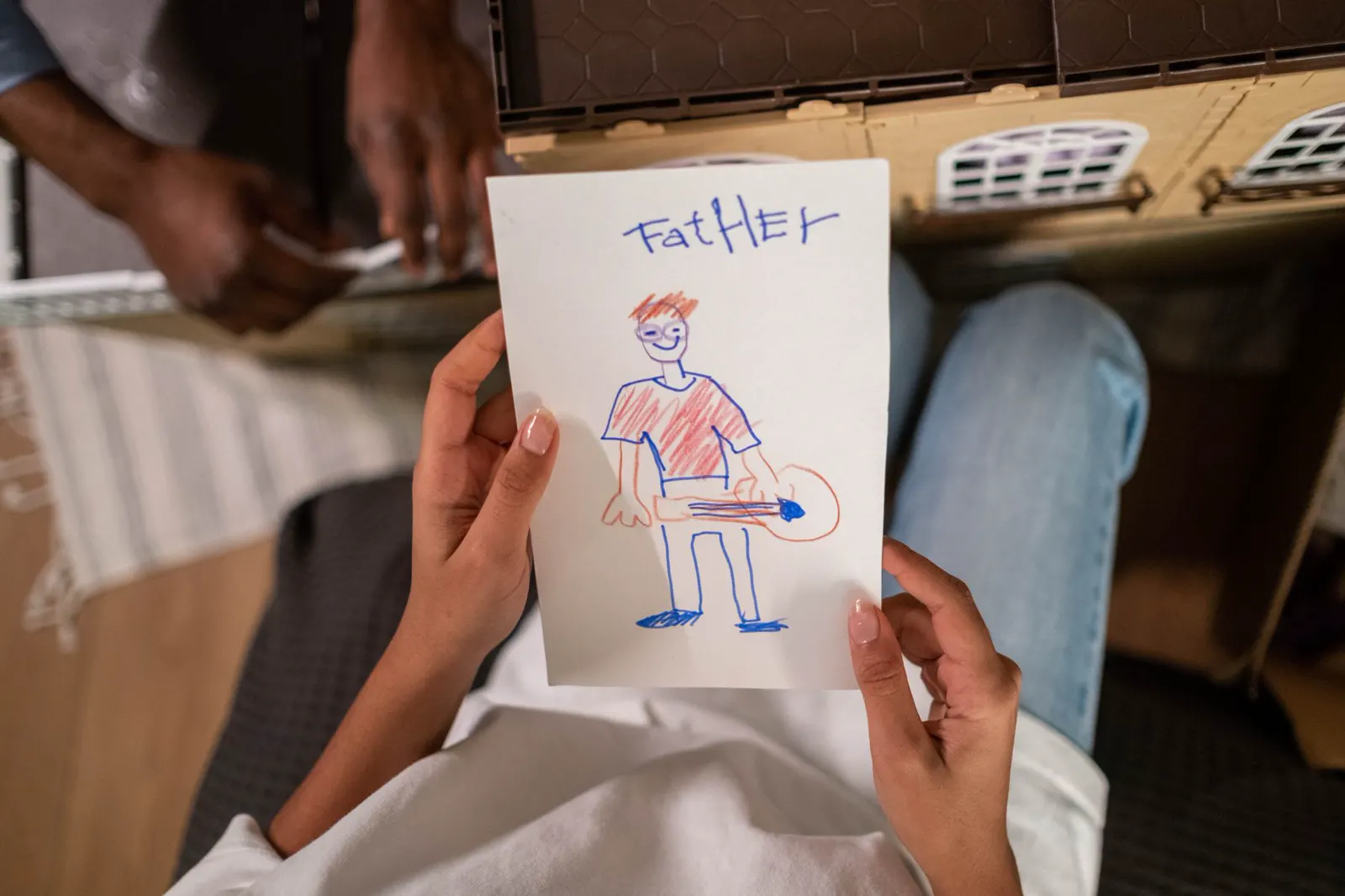
Contents7
Ask a child to draw the family and you get one of the most memorable things they'll ever make. These 24 prompts — 8 per age band — take less than a minute to set up, and the last section tells you exactly what to say when they hand you the page.
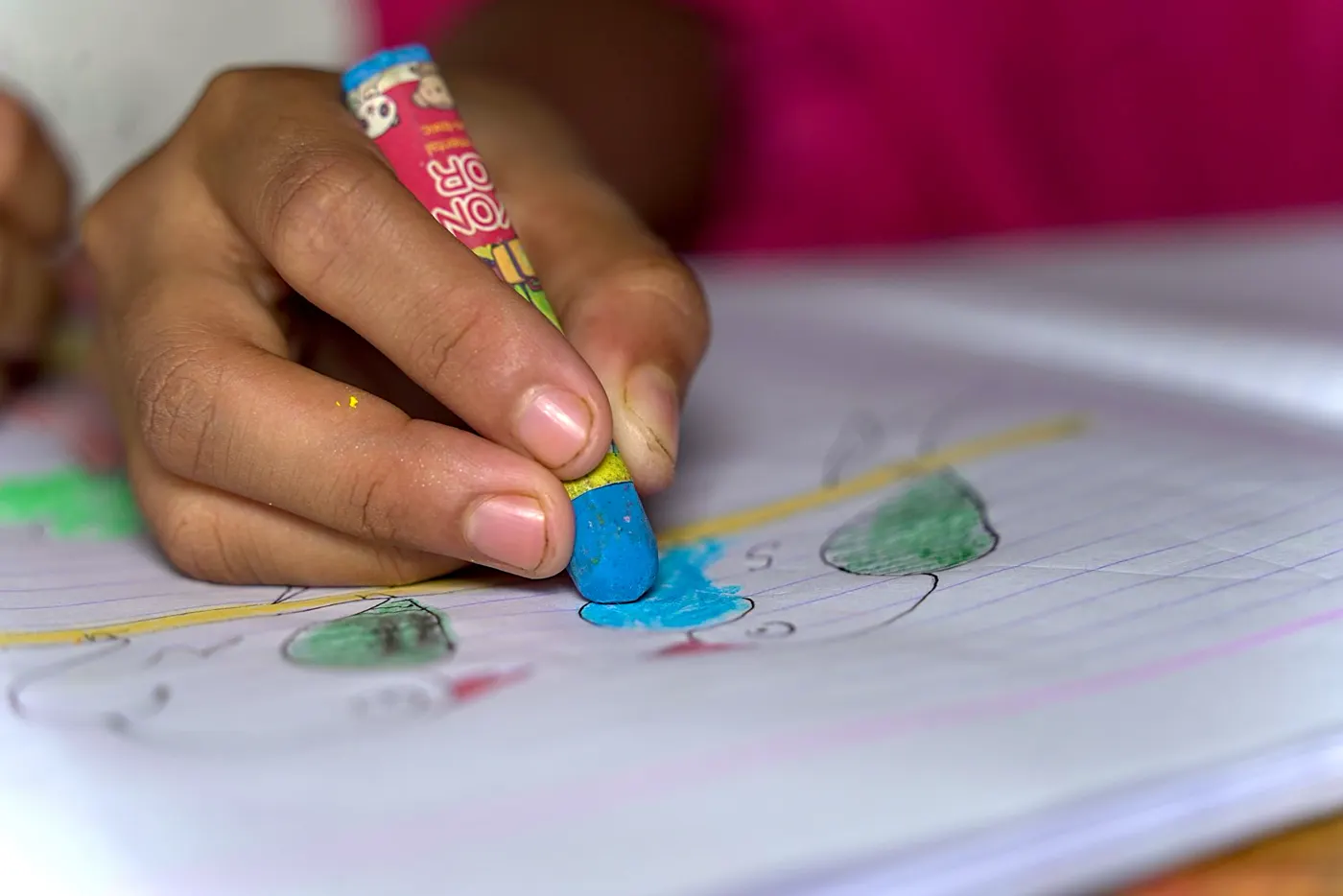
How children draw people
Children everywhere move through the same drawing stages in roughly the same order — a finding confirmed by Rhoda Kellogg's analysis of nearly one million children's drawings from across the world (Analyzing Children's Art, 1970), and echoed by Viktor Lowenfeld's foundational work in early childhood art education (Creative and Mental Growth, 1947).
| Age | Stage | What appears on the page |
|---|---|---|
| 2–3 | Scribble | Loops and lines, often named after drawing |
| 3–5 | Pre-schematic | "Tadpole" figures — a circle head with legs, no torso |
| 5–7 | Schematic | Fixed symbols: the same person drawn the same way each time |
| 7–10 | Dawning realism | Baseline, clothing details, proportions, expressions |
Every child develops at their own pace. If you have questions about your child's drawing development, talk to their paediatrician or teacher.
Ages 2–4: Scribbles that mean everything
At this age, the act matters more than the result. The child may name the drawing after finishing — or not at all. All 8 prompts work best with large, chunky crayons. Use scissors or permanent markers only with an adult's direct help.
Ages 4–7: Tadpole people and rainbow families
The classic tadpole figure — a circle head with legs attached, no torso — appears around ages 3–4 and is completely typical (Lowenfeld & Brittain, 1947). By ages 5–7, a torso emerges, figures gain clothing, and the same face is drawn the same way every time.
Everyone doing their thing
What does each person love to do most? Draw them right in the middle of doing it.
Grandma and grandpa
A wonderful portrait to send in a letter or show on a video call.
Family as animals
Who is the lion? Who is the rabbit? The child assigns every role.
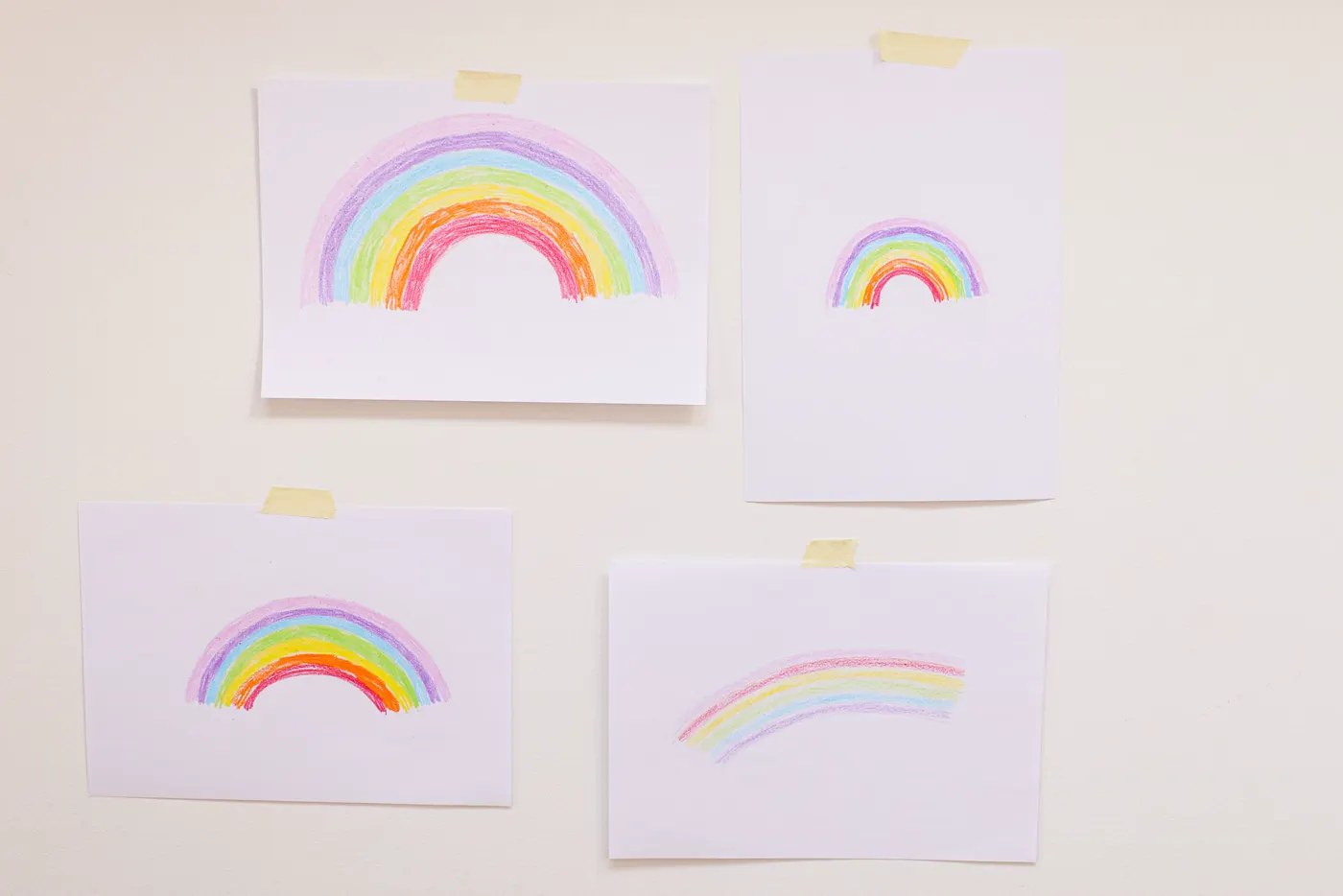
Rainbow family portrait
One colour per person, no rules, the whole sheet.
Family at the park
Adds a background — grass, sky, a tree — to the portrait for the first time.
Superhero costumes
What power does each family member have? Draw the costume in full detail.
Draw today's outfits
What is everyone wearing right now? Buttons, stripes, spots and all.
Portrait for the fridge
Announce in advance that it goes on the fridge — instant motivation.
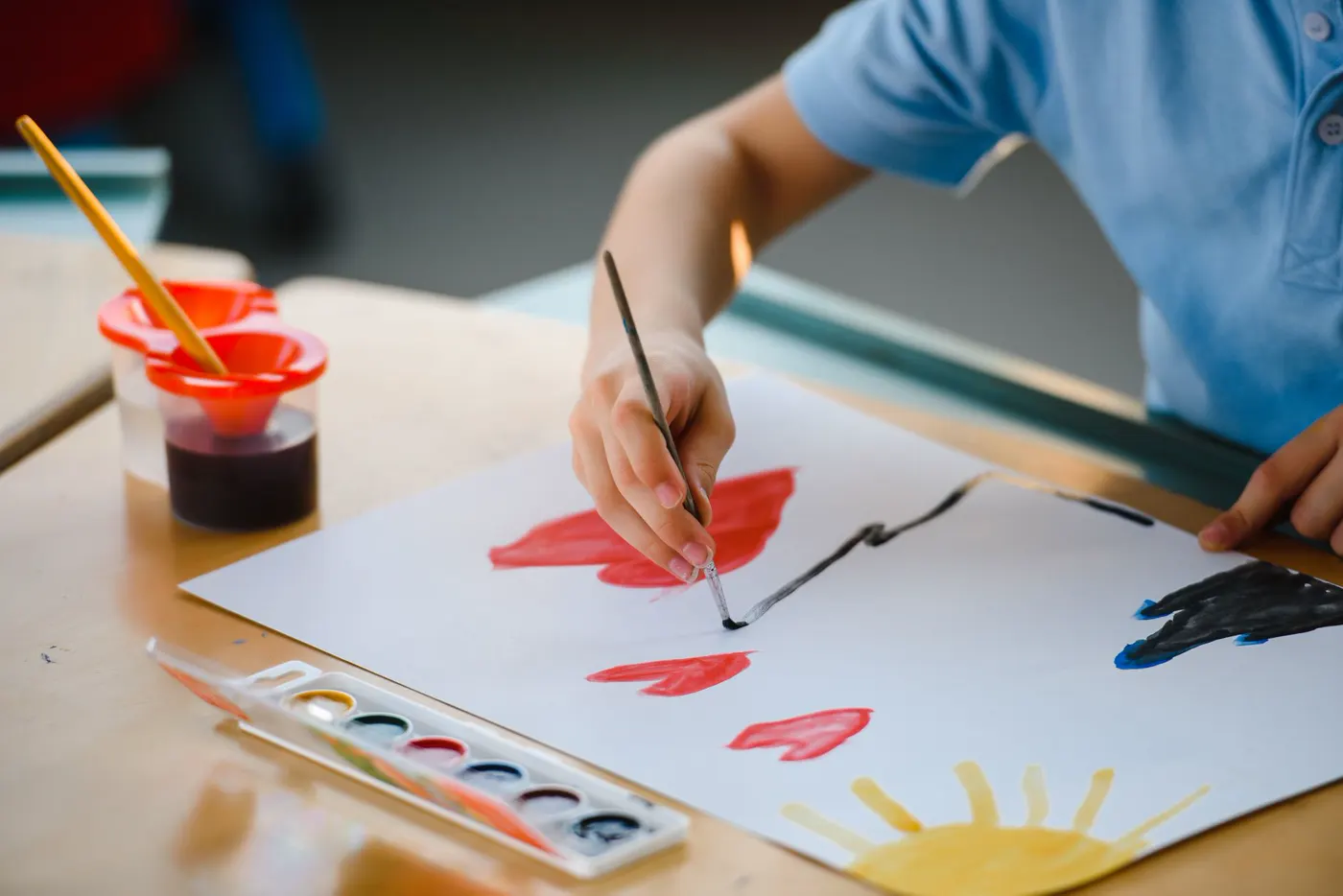
Ages 7–10: Portraits with stories
Around ages 7–9, children begin comparing their drawings to reality — researchers call this the "crisis of realism" (Lowenfeld & Brittain, 1947). It is the age when many children say "I can't draw." Prompts that focus on story and feeling rather than likeness take the pressure off and produce far richer results.
One emotion per person
Surprised, sleepy, excited — one face per person, labelled with their name.
Bird's-eye view portrait
Draw the family from above, as if from a drone. Tricky, fun, and completely original.
Family timeline
Past, present, future — three frames side by side on one page.
Favourite book characters
Draw each person as the character they'd most want to be.
Where we come from
A map, real or imaginary, of the places the family is rooted in.
Family postage stamp
Draw the portrait inside a stamp border — framed, perforated, ready to travel.
Draw everyone's hands
Just the hands, holding each other. Surprisingly moving to look back on later.
The family in 20 years
Who will be taller? What will the pet look like? Wild guesses are the whole point.
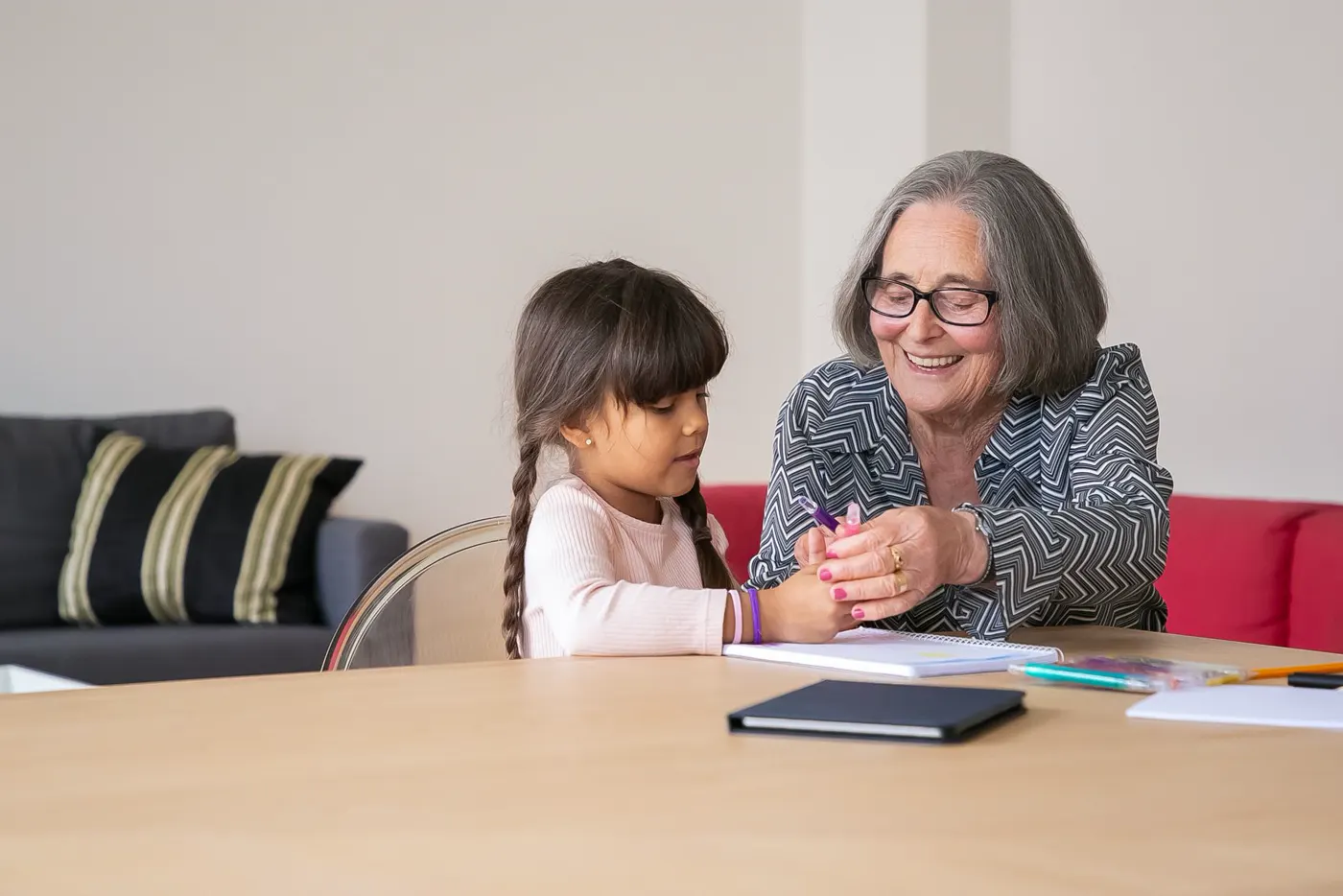
What to say when they show you the drawing
The one sentence that matters most: "Tell me about your drawing." Open, warm, impossible to get wrong.
- 1Look
Put your phone down first
Full attention for 30 seconds does more than any compliment.
- 2Ask
"Who is this?"
Point to each figure. You'll hear things you didn't expect — that's the whole point.
- 3Notice
Name what you see
"You drew everyone so big" or "I love all these colours" — specific and true, never a grade.
- 4Keep
Date the back
Name, age, and date in pencil. Future you will be very grateful.
Saving the portrait
A few quick things to do with the finished drawing — none take more than five minutes.
Photograph it flat
Natural light, phone directly overhead, no shadows. The photo lasts when the paper doesn't.
Date the back
Name, age, and one sentence from the child about who is who.
Post it to grandparents
A drawing in an envelope is better received than almost any parcel.
One frame per year
Pick one portrait a year to frame — a row of them on a shelf becomes a family timeline.
FAQ
At what age do children start drawing recognisable people?
Most children draw their first recognisable figure — typically a "tadpole" with a circle head and legs — between ages 3 and 4, according to Lowenfeld & Brittain (Creative and Mental Growth, 1947). Earlier scribbles are equally valuable, even when they look abstract.
My child says "I can't draw." What should I say?
Say: "Show me what you're imagining and I'll watch." Then stay quiet. This feeling peaks around ages 7–9, when children start judging their work against reality. Shift focus to the story, not the likeness.
How long should a drawing session last?
Follow the child's lead. For ages 2–4, five minutes is a complete session. Ages 5–7 can go 15–20 minutes. Ages 7–10 often stay 30 minutes or more once they're in the flow.
Should I draw alongside my child?
Yes — drawing at the same time, on your own sheet, shows them that drawing is for everyone. Make your own family portrait. Keep it as messy as theirs.
How do I encourage a child who is frustrated with their drawing?
Redirect to the story: "What is happening in the picture?" Describing the scene often restores the urge to keep drawing. Never compare their drawing to another child's, even favourably.
The best family portrait your child will ever make is the next one. Set out the crayons, ask the question, and get out of the way.